

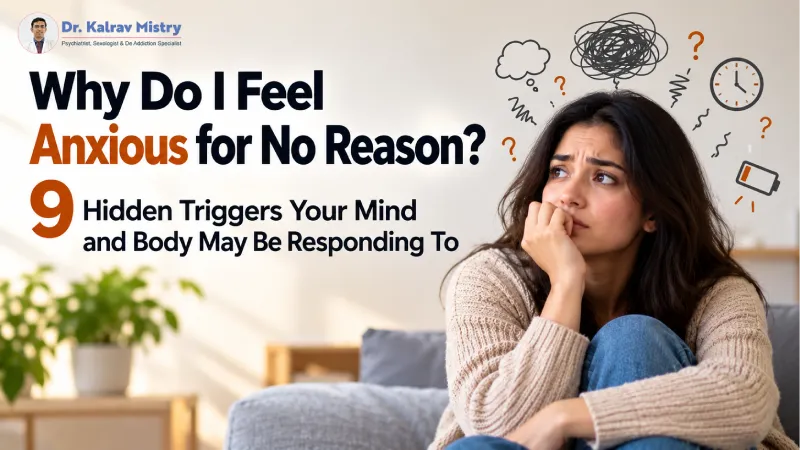
Key Takeaways
- Anxiety can often arise from hidden triggers rather than obvious stressors we expect.
- Accumulated stress from daily life can manifest as unexpected anxiety, even during quiet moments.
- Sleep disruption, caffeine, and nicotine can significantly impact your anxiety levels unexpectedly.
- Unresolved emotions may contribute to feelings of anxiety, highlighting the need for self-reflection.
- If anxiety disrupts daily activities, consulting with Anxiety Disorders Treatment Doctors in Ahmedabad can provide valuable support.
Dr Kalrav Mistry is a psychiatrist providing professional anxiety care in Ahmedabad.
Feeling anxious when nothing seems obviously wrong can be especially confusing. Your heart may race, your thoughts may become restless, or your body may feel tense even though you cannot point to one clear problem. People searching for Anxiety Disorders Treatment Doctors in Ahmedabad often describe exactly this experience: “Everything seems fine, so why do I still feel anxious?”
Sometimes, the trigger is not absent. It is simply less obvious than we expect.
Why Anxiety Can Seem to Appear Without a Reason
Anxiety does not always arrive after a major argument, frightening event or stressful day. Your mind and body continuously respond to sleep, stimulation, emotions, physical sensations and pressures that may have become part of your normal routine.
9 Hidden Triggers Behind Unexplained Anxiety
When anxiety seems random, these less-obvious triggers are worth considering.
Stress You Have Become Used To
A packed work schedule, family responsibilities, commuting, deadlines and constant decision-making can gradually become “normal.” You may no longer consciously feel stressed, yet your body may still be reacting to the accumulated pressure.
This is one reason anxiety can appear during quiet moments rather than during the busiest part of the day.
Poor or Irregular Sleep
Sleep and anxiety can influence one another. When sleep is short, broken or inconsistent, you may feel more irritable, tense or emotionally reactive the following day.
At the same time, anxiety itself can make falling asleep difficult. The result can become a repeating cycle in which tiredness and anxious feelings keep feeding each other.
Caffeine and Nicotine
Coffee, strong tea, energy drinks and nicotine can create physical sensations such as restlessness, jitteriness or a faster heartbeat.
For someone already sensitive to anxiety, these sensations may feel similar to the beginning of an anxious episode. The mind may then interpret an ordinary physical reaction as a sign that something is wrong.
Constant Digital Stimulation
Work messages, social-media feeds, news alerts, emails and notifications can keep your attention switching throughout the day.
Even when the content itself is not stressful, your mind may get very little uninterrupted quiet time. If you notice anxiety appearing after long periods online, your digital routine may be worth observing rather than automatically dismissing the feeling as random.
Anticipating Something You Are Not Actively Thinking About
A meeting tomorrow, an upcoming journey, a medical appointment, a difficult conversation or an unfinished responsibility can create background tension.
Your mind can still react to an experience even when you are not constantly thinking about it. Sometimes anxiety is anticipation appearing before the thought itself becomes obvious.
Unresolved Emotional Pressure
Frustration, relationship uncertainty, grief, guilt or a decision you keep postponing can stay in the background of your day.
When those feelings are not fully processed, anxiety may become the sensation you notice first. Instead of asking yourself, “Why am I feeling anxious?” try asking, “What has been affecting my emotional well-being recently?”
Becoming Afraid of Your Own Body Sensations
After experiencing a strong episode of anxiety or panic, some people begin monitoring their body closely.
A faster heartbeat, dizziness, sweating or a change in breathing may then attract immediate attention. Worrying about the sensation can increase fear, which makes the sensation more noticeable and creates a difficult feedback loop.
Medicines, Substances or Changes in Their Use
Certain medicines and substances may influence how a person feels, and stopping or changing some substances can also produce uncomfortable symptoms.
If anxiety begins after a medication change or appears alongside unusual physical symptoms, discuss it with a qualified healthcare professional. Do not stop taking any prescribed medication without first consulting your healthcare provider.
A Physical Health Issue That Needs Attention
Some physical conditions can produce sensations that overlap with anxiety, including changes in heartbeat, breathing, energy levels or other bodily functions.
That does not mean unexplained anxiety automatically indicates a physical illness. It does mean that new, persistent, severe or unusual symptoms should not simply be labelled as “just anxiety” without appropriate assessment.
When Should You Speak With a Professional?
Consider seeking help when anxiety repeatedly interrupts your sleep, concentration, work, relationships or everyday activities. Avoiding places or situations because you fear becoming anxious can also be an important sign that further assessment may help.
At Dr Kalrav Mistry, our approach begins by understanding the pattern—not merely the anxious moment itself. Patients searching for Anxiety Disorders Treatment Doctors in Ahmedabad can discuss their symptoms, possible triggers, daily-life impact and relevant health history during a professional consultation.
You do not need to know exactly what is causing the anxiety before seeking support. That is part of what assessment is designed to explore.
What Should You Notice Before Your Consultation?
A few observations can make it easier to understand your anxiety pattern:
- When the anxiety usually begins and how long it lasts
- How well you have been sleeping
- Your caffeine, nicotine or alcohol intake
- Recent medication or health changes
- Thoughts, situations or physical sensations that appear beforehand
- Activities or situations you have started avoiding
There is no need to analyse every feeling. A few clear observations can give Anxiety Disorders Treatment Doctors useful context when discussing what may be happening.
Our Approach
At Dr Kalrav Mistry, we believe anxiety care should begin with understanding the individual rather than treating every anxious experience as identical. Our approach may include comprehensive assessment, personalised treatment planning, psychotherapy approaches such as cognitive-behavioural therapy and medication management when clinically appropriate. Patients considering Anxiety Disorders Treatment Doctors in Ahmedabad can speak with our team about symptoms, recurring triggers and how anxiety is affecting everyday life in a professional and respectful clinical setting.
Conclusion
Feeling anxious “for no reason” does not necessarily mean there is no trigger. Sleep disruption, stimulants, accumulated stress, emotional pressure, anticipation, physical sensations, medicines or health-related factors may all deserve attention. At Dr Kalrav Mistry, we encourage patients to look at the wider pattern instead of judging themselves based on one anxious moment. If symptoms keep returning or interfere with daily life, consulting Anxiety Disorders Treatment Doctors in Ahmedabad can help you understand what may be contributing to them and discuss appropriate Anxiety Disorders Treatment options.
If recurring anxiety is affecting your sleep, concentration, work or relationships, you can speak with Dr Kalrav Mistry to discuss your symptoms and explore the right next step for your mental health.
Call +91 96249 11162 or book your appointment today.
Frequently Asked Questions
Anxiety Unexplained Anxiety Anxiety Triggers Mental Health Anxiety Symptoms Stress Panic Symptoms Anxiety Specialist Psychiatrist Ahmedabad Mental Wellness
